
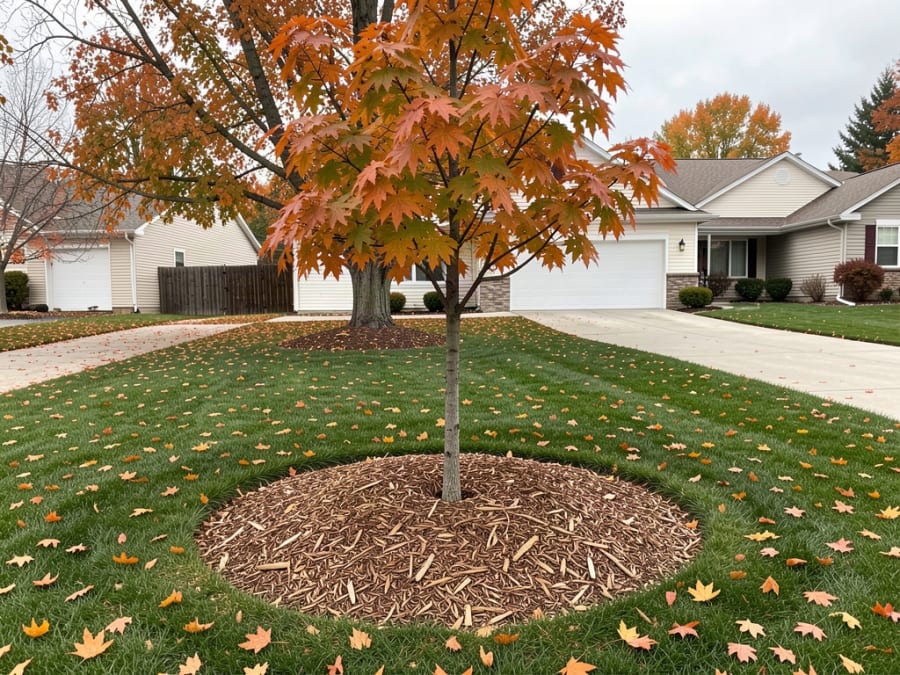
Ask most people when to plant and they’ll say spring. Garden centers are busiest in April and May, and a sunny spring day makes everyone want to dig. But for most hardy woody plants and perennials, early to mid-fall is the better time to plant. Here’s why.
1. Warm soil + cool air = root growth
In fall, air temperatures drop quickly but soil cools slowly. Soil holds the summer’s warmth for weeks. That combination is ideal for a new plant: warm soil encourages roots to grow, while cool air slows top growth and reduces the amount of water the leaves lose.
Roots don’t go dormant the way branches do. They can keep growing as long as the soil stays above roughly 40°F, and in much of the U.S. that lasts into December or even January. University of Kentucky specialists note that roots are most active when soil is above freezing but below about 50–60°F, which describes a typical fall and early winter.
2. Autumn rain does the watering
In many regions fall brings more regular rain and less evaporation than late spring and summer. That means the root ball stays evenly moist with less help from the hose. Oregon State University Extension points out that from mid-September through mid-November, Oregon soils stay warm enough for strong root development while autumn rains reduce the need for extra watering.
3. Less stress on the plant
A shrub planted in spring has to do two hard jobs at once: grow new roots and push out leaves and flowers. Flowering is the plant’s reproductive cycle and uses a lot of energy. Doing both at the same time, right before summer heat, is stressful.
A shrub planted in fall only has one job: grow roots. The leaves are finished for the year, so the plant can focus its energy below ground.
4. A head start next spring
When spring arrives, a fall-planted tree or shrub already has a season of root growth behind it. It can take up water and nutrients as soon as the soil warms, which usually means more vigorous spring growth and better flowering than the same plant set out in April. Non-flowering shrubs and evergreens benefit the same way, with a fuller first flush of new growth.
That head start matters most in the plant’s first summer. A fall-planted shrub faces July heat with months of established roots instead of a few weeks.
Bonus reasons
- Cooler working conditions. Digging is easier on you, too.
- Soil is workable. Fall soil is usually drier and crumblier than cold, soggy spring soil, so it is less likely to compact when you dig.
- You can see the gaps. After a full growing season, you know exactly where your landscape needs a tree for shade, a shrub for screening or a spot of color.
- Nursery deals. Many garden centers discount trees and shrubs in fall to clear inventory before winter.
- Bulbs require it. Tulips, daffodils, crocus and other spring bulbs must be planted in fall to bloom. Bulb guide
When fall planting is not the best choice
Fall planting works for most plants in most places, but there are exceptions:
- Some species root slowly and are safer planted in spring in cold-winter areas, including many oaks, birches, magnolias, ginkgo, tulip tree and sweetgum. See the full list.
- Broadleaf evergreens and marginally hardy plants can suffer winter burn if planted late in very cold climates. Plant them early in the season, or wait for spring.
- Late planting in the far north. If the ground freezes early where you live, plant as early in fall as you can.
- Warm-season lawns (Bermuda, zoysia, St. Augustine) should be established in late spring and summer, not fall.