
Planting is only step one. The first year of care, especially watering, decides whether a new tree or shrub thrives. Here’s how to take care of fall plantings through their first winter and into spring.
How much and how often to water
University of Minnesota Extension recommends this schedule for newly planted trees and shrubs during the growing season:
| Time since planting | How often |
|---|---|
| Weeks 1–2 | Daily |
| Weeks 3–12 | Every 2–3 days |
| After 12 weeks | Weekly until roots are established |
- Trees: about 1–1.5 gallons of water per inch of trunk diameter at each watering.
- Shrubs: about one-quarter to one-third of the volume of the pot it came in.
- Rain counts only if it’s substantial. Unless more than about an inch falls, still check the root ball.
In fall, cool temperatures and rain usually let you stretch those intervals. Oregon State recommends watering once a week until steady rains begin. Always check first: push a finger or trowel 2–3 inches into the root ball. If it’s dry, water. If it’s soggy, wait.
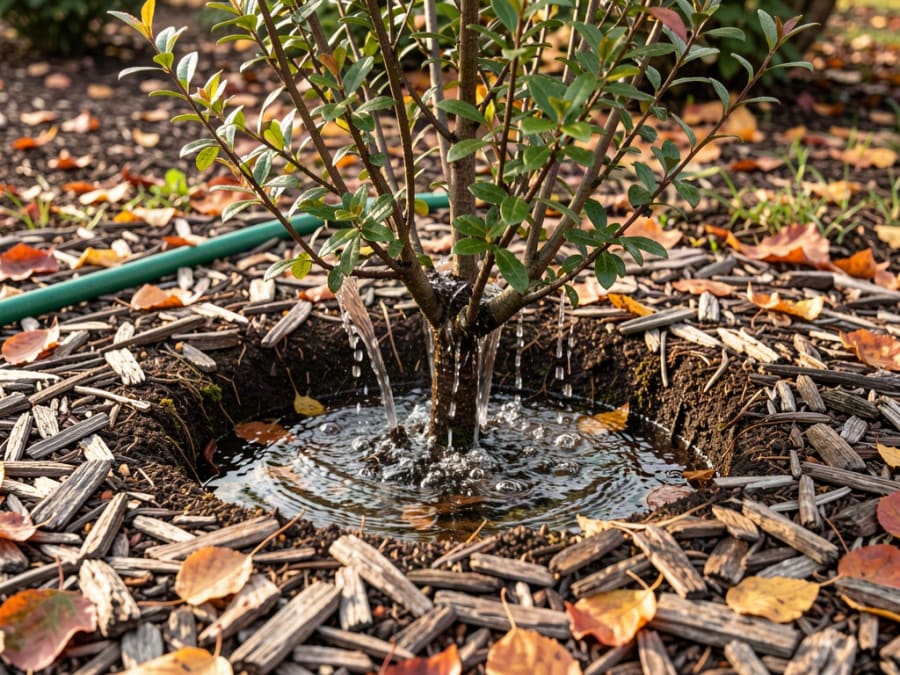
Keep watering until the ground freezes
New plants, and evergreens in particular, go into winter best when they’re well hydrated. Keep watering whenever the soil is dry and not frozen. In dry-winter regions such as the Mountain West and Plains, Colorado State University recommends watering during dry winter spells, at midday, when air and soil are above 40°F and there’s no snow cover.
Mulching the right way
- Depth: 2–4 inches of wood chips or shredded bark over the whole planting area (2–3 inches for bulbs and perennials).
- Keep it off the trunk. Pull mulch back several inches from trunks and stems. “Mulch volcanoes” piled against bark invite rot, disease and rodents.
- Why it matters: mulch keeps soil moist and evens out temperatures, which extends fall root growth. It also suppresses weeds and slowly feeds the soil.
- Wood chips over bark dust: Oregon State notes wood chips are better for long-term soil health.
Winter protection
- Young, thin-barked trees (maples, fruit trees, lindens) can get sunscald. Use a light-colored tree wrap over winter and remove it in spring.
- Rodents and rabbits: a hardware-cloth collar around the base of young trees prevents girdling.
- Exposed evergreens: burlap screens on the windward side reduce winter burn in cold, windy sites.
- Frost heave: check perennials after freeze-thaw cycles and gently press back any that have lifted.
Next spring
Resume regular watering as the soil warms, and keep it up through the first summer. That’s when new plants face their biggest test. Established shrubs usually need about two growing seasons to root in fully, and trees take longer, about 1.5 years per inch of trunk diameter in cold climates.