
If you want tulips, daffodils and crocus in spring, you have to plant them in fall. Spring-flowering bulbs need several weeks of cool soil to grow roots, followed by a winter chill to trigger blooming.
When to plant bulbs
Plant once the soil has cooled below about 60°F, usually after a few weeks of cool nights. Rutgers University recommends mid-September through October in New Jersey. As a rule of thumb:
- Cold climates (zones 3–5): September to early October
- Moderate climates (zones 6–7): October to November
- Mild climates (zones 8+): November to December. Tulips and hyacinths may need 6–8 weeks of pre-chilling in the refrigerator (away from fruit) before planting.
Get them in the ground at least a few weeks before it freezes. Bulbs planted a little late still usually bloom, just a bit later.
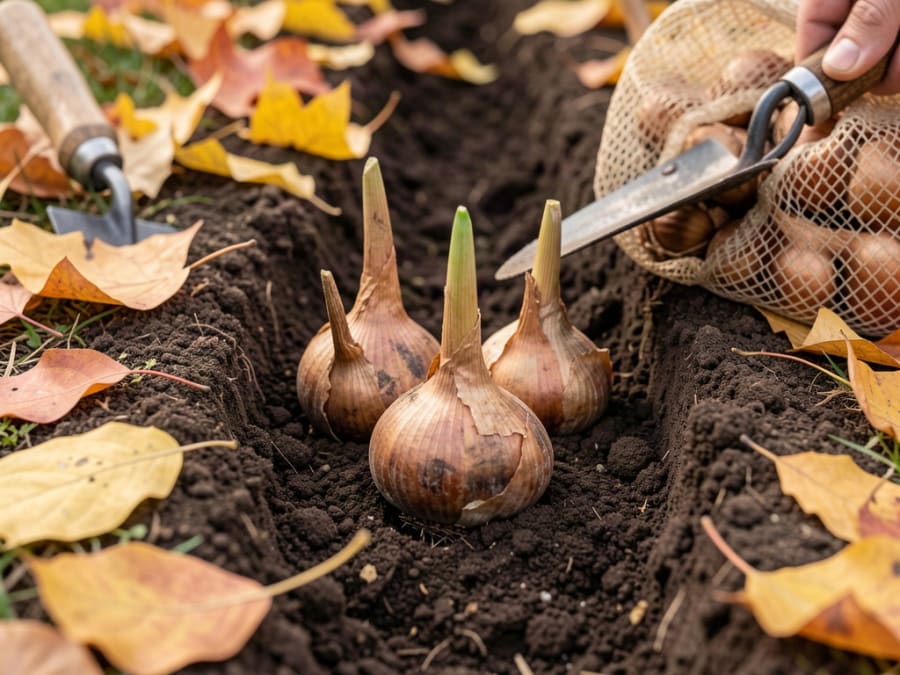
How to plant bulbs
- Choose a sunny, well-drained spot. Bulbs rot in soggy soil.
- Dig the whole bed, not individual holes, to the right depth. Loosening the entire area improves drainage and makes planting faster.
- Plant 2–3 times as deep as the bulb is tall, measured from the bottom of the bulb. Large bulbs like tulips and daffodils go about 8 inches deep. Small bulbs like crocus go 3–4 inches deep.
- Pointy side up, roots down. If you can’t tell, plant it on its side and it will sort itself out.
- Space in groups. Clusters of 10 or more look more natural than single rows.
- Water once after planting to settle the soil and start rooting, then mulch 2–3 inches deep.
Deer- and rodent-resistant choices
Daffodils, alliums, snowdrops, grape hyacinths (Muscari) and fritillaria are rarely eaten by deer, squirrels or voles. Tulips and crocus are favorite snacks. Protect them with wire mesh or plant them where critters don’t roam.