
Nearly every hardy plant sold in a nursery container can be planted in fall. Here’s what does especially well, plus the short list of plants that are better left until spring in cold-winter climates.
Deciduous trees
Most shade and flowering trees establish well from fall planting, especially species with fibrous, fast-growing roots:
- Maples (most)
- Linden
- Elm
- Hackberry
- Honeylocust
- Crabapple
- Apple
- Hawthorn
- Redbud
- Catalpa
- Horse chestnut
- Sycamore
- Serviceberry
Flowering and foliage shrubs
Shrubs are the classic fall-planting success story. With roots settled over winter, they flush and flower better their first spring.
- Lilac
- Forsythia
- Witch hazel
- Viburnum
- Spirea
- Hydrangea
- Ninebark
- Weigela
- Boxwood
- Barberry
- Potentilla
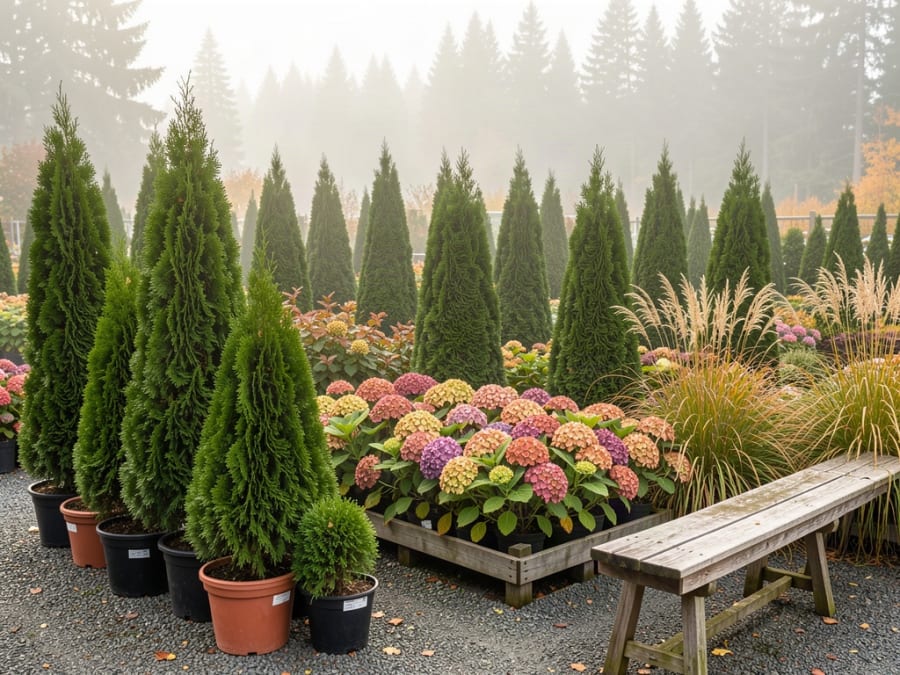
Evergreens and conifers
Evergreens keep losing moisture through their needles and leaves all winter, so give them a head start. Plant them early in the fall season (late August through September in cold climates), water them deeply until the ground freezes, and mulch well.
- Arborvitae
- Juniper
- Spruce
- Pine
- Fir
- Yew
- Hemlock
- False cypress (Chamaecyparis)
Perennials
Fall is ideal for planting perennials and for dividing crowded clumps of spring- and summer-bloomers. Plant at least six weeks before the ground freezes so roots can anchor before frost-heave season.
- Hosta
- Daylily
- Peony
- Coneflower
- Black-eyed Susan
- Sedum
- Ornamental grasses
- Salvia
- Catmint
- Hellebore
- Coral bells
Spring-flowering bulbs
Tulips, daffodils, crocus, hyacinths, alliums and snowdrops need a cold period in the ground to bloom, so they must be planted in fall. Read the bulb planting guide.
Cool-season lawns
Late summer to early fall is the best time to seed or overseed cool-season grasses such as tall fescue, Kentucky bluegrass and perennial ryegrass. The soil is warm enough for fast germination, and weed competition is dropping. Aim to seed early enough for the grass to grow and be mowed a few times before cold weather. Warm-season grasses (Bermuda, zoysia, St. Augustine) are the exception and should be planted in late spring or summer.
Edibles
- Garlic is planted in fall for a summer harvest.
- Fruit trees and berry bushes can be planted in fall where winters are mild. In very cold regions, many gardeners prefer spring for stone fruits (cherries, plums, peaches).
- Rhubarb and asparagus crowns can go in during fall in many areas.
Plants better planted in spring (cold climates)
Some trees and shrubs root slowly, have fleshy or sparse roots, or are sensitive to winter injury. In cold-winter regions (roughly zones 3–6), University of Wisconsin–Madison Extension and others suggest planting these in spring instead:
- Oak
- Birch
- Beech
- Magnolia
- Ginkgo
- Tulip tree
- Sweetgum
- Red maple
- Cherry & plum
- Poplar
- Willow
- Dogwood
- Rhododendron & azalea
In mild-winter regions such as the Pacific Northwest and the South, many of these can still be planted successfully in early fall. When in doubt, ask your local nursery or extension office.